
The Short Answer: No, But They’re Transforming
Traditional veterinary software companies aren’t disappearing: they’re evolving. While the industry has shifted dramatically toward cloud-based solutions, established players continue generating substantial revenue and serving specific market segments that still require on-premise deployments.
The real question isn’t whether these companies will survive, but how they’re adapting to meet changing practice needs in 2026.
Current Market Reality: Cloud Dominance with On-Premise Persistence
Cloud Solutions Lead the Pack
Cloud-based veterinary software now captures over 60% of the market, with projected growth of 14.4% annually through 2030. This shift reflects broader industry digitalization and the appeal of Software as a Service (SaaS) models that reduce upfront costs and maintenance burdens.
Traditional Vendors Remain Profitable
Major players like IDEXX, Covetrus, Henry Schein, and Patterson continue commanding substantial market share through bundled offerings that combine diagnostics, pharmaceuticals, and software. IDEXX alone recorded $312.6 million in software revenue in fiscal 2024: an 11.9% year-over-year increase.
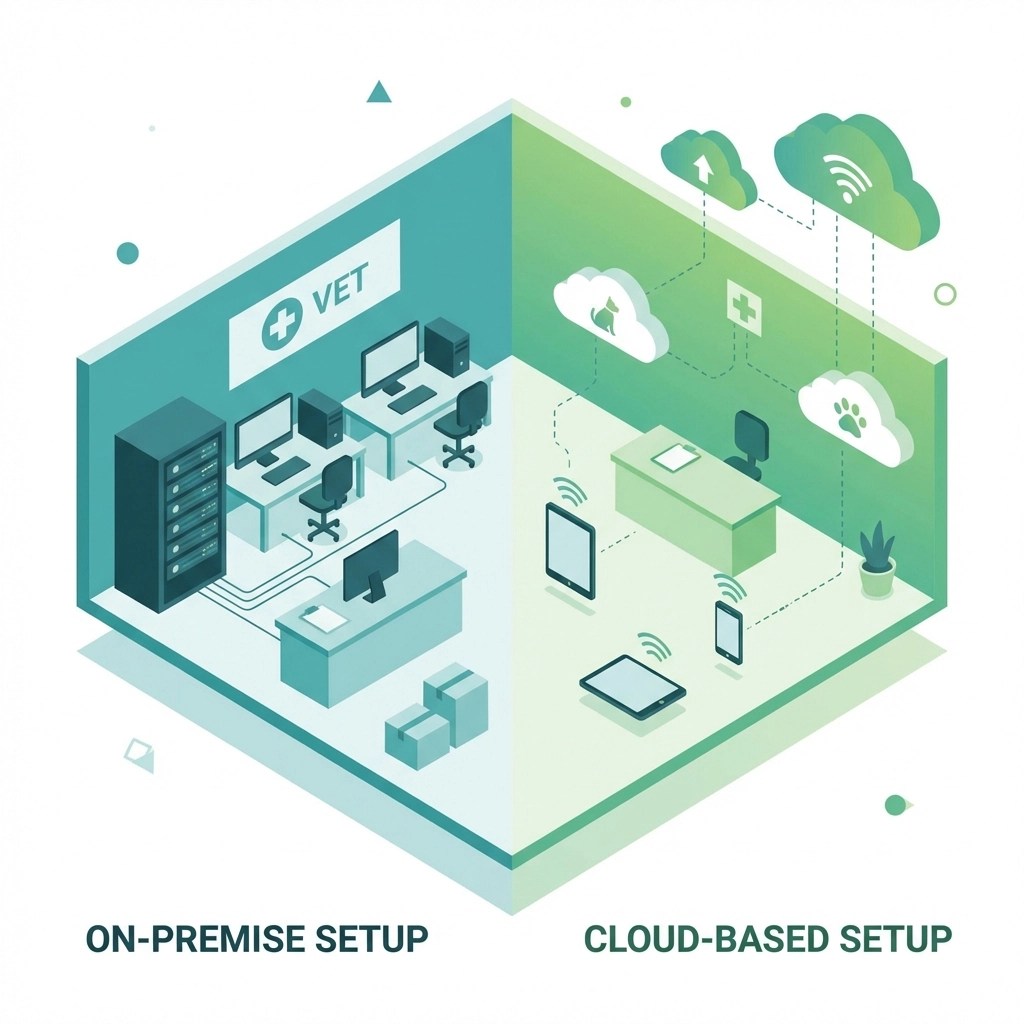
Who Still Needs On-Premise Solutions?
Large-Scale Operations
Multi-location veterinary hospitals and university veterinary programs often require on-premise systems for their complex operational needs. These organizations typically have:
- Dedicated IT departments capable of managing infrastructure
- Complex workflow requirements that demand customization
- Integration needs with specialized equipment and legacy systems
- High transaction volumes requiring consistent performance
Regulatory and Compliance Requirements
Practices operating under strict regulatory frameworks may prefer on-premise solutions for:
- Enhanced data residency control
- Compliance with specific industry standards
- Audit trail requirements
- Data sovereignty concerns
Geographic and Infrastructure Limitations
Rural practices and facilities in areas with unreliable internet connectivity still benefit from on-premise deployments that ensure:
- Consistent system availability
- Independence from internet connectivity
- Local data processing capabilities
- Reduced latency for critical operations

Why Cloud Solutions Are Winning
Lower Total Cost of Ownership
Cloud-based veterinary software eliminates several traditional cost centers:
- No hardware purchases or maintenance
- Reduced IT staffing requirements
- Automatic software updates and security patches
- Predictable monthly subscription costs
Enhanced Accessibility and Flexibility
Modern veterinary practices value the mobility and flexibility that cloud solutions provide:
- Remote access for telemedicine consultations
- Multi-location practice management
- Real-time data synchronization across devices
- Seamless integration with mobile applications
Scalability and Innovation
Cloud platforms offer advantages that on-premise systems struggle to match:
- Automatic scaling during peak usage periods
- Rapid deployment of new features and updates
- Integration with emerging technologies like AI diagnostics
- Data analytics and reporting capabilities

Traditional Companies’ Adaptation Strategies
Hybrid Offerings
Established veterinary software companies have responded by developing hybrid solutions that combine cloud benefits with on-premise security:
- Private cloud deployments for sensitive data
- Hybrid architectures allowing both local and cloud processing
- Gradual migration paths from on-premise to cloud
- Customizable deployment options based on practice needs
Enhanced Service Bundles
Traditional vendors leverage their established relationships and infrastructure to offer comprehensive packages:
- Integrated diagnostic equipment and software
- Pharmaceutical supply chain integration
- Training and support services
- Hardware and software maintenance contracts
Making the Right Choice for Your Practice
Assess Your Current Infrastructure
Before deciding between on-premise and cloud solutions, evaluate:
- Your current IT capabilities and staffing
- Internet connectivity reliability and speed
- Existing equipment integration requirements
- Data security and compliance obligations
Consider Your Growth Plans
Your software choice should align with your practice’s future direction:
- Multi-location expansion plans
- Telemedicine service offerings
- Staff remote work requirements
- Technology adoption timeline
Evaluate Total Cost of Ownership
Compare all associated costs over a 3-5 year period:
- Initial setup and migration expenses
- Ongoing maintenance and support costs
- Staff training and productivity impacts
- Hardware refresh and upgrade requirements

The Future: Hybrid Models and Specialized Solutions
Industry Trends Point to Flexibility
The veterinary software landscape is moving toward flexible deployment models that allow practices to choose the right solution for their specific needs. This includes:
- Cloud-first architectures with on-premise options
- Edge computing solutions for rural practices
- Specialized deployments for research and teaching facilities
- Industry-specific compliance and security frameworks
Emerging Technologies Drive Change
New developments in veterinary care are influencing software requirements:
- AI-powered diagnostic tools requiring cloud processing
- Telemedicine platforms demanding mobile accessibility
- IoT device integration for monitoring and diagnostics
- Advanced analytics requiring substantial computational resources
Key Considerations for Decision Making
Security and Data Protection
Both on-premise and cloud solutions offer robust security when properly implemented:
- Cloud providers often exceed individual practice security capabilities
- On-premise solutions provide direct control over data access
- Hybrid approaches can address specific security requirements
- Regular security audits are essential regardless of deployment model
Integration and Workflow Requirements
Your software choice should seamlessly support your practice operations:
- Electronic medical record integration
- Laboratory equipment connectivity
- Billing and payment processing
- Inventory management systems

Looking Ahead: What This Means for Your Practice
The veterinary software industry isn’t experiencing a simple transition from old to new: it’s evolving to serve diverse practice needs more effectively. Traditional companies continue innovating and adapting their offerings, while cloud-native providers focus on accessibility and modern features.
Your choice between on-premise and cloud solutions should depend on your specific requirements, not industry trends alone. Consider your practice size, geographic location, regulatory requirements, and growth plans when making this decision.
Ready to Evaluate Your Options?
Whether you’re considering migrating from an on-premise system or choosing your first practice management solution, the key is understanding how different deployment models align with your operational needs and long-term goals.
For practices seeking modern, flexible veterinary software solutions that can adapt to your specific requirements, explore our comprehensive platform designed to support veterinary practices of all sizes and deployment preferences.